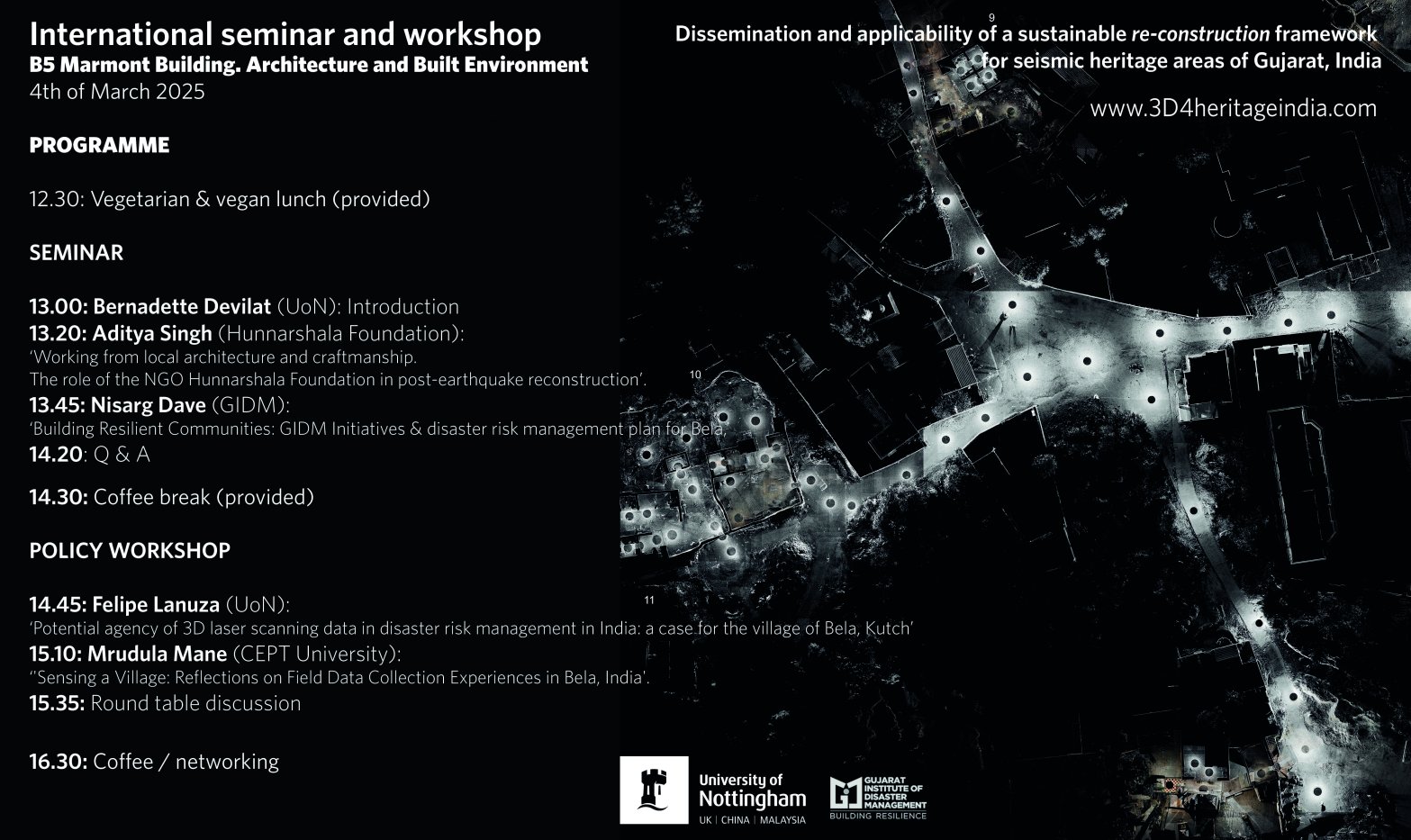
On the 4th of March 2025, Dr Bernadette Devilat and Dr Felipe Lanuza, from the Architecture, Culture and Tectonics Research Group University of Nottingham (UoN), hosted an International Seminar open to the whole University. It included lectures by international guests from our partner institutions in previous phases of this research project: Nisarg Dave, Director of the Gujarat Institute of Disaster Management (GIDM); Aditya Singh from the Hunnarshala Foundation; and Mrudula Mane, from CEPT University.

Previous publications, leaflets, booklets and other material used during the engagement activities with the community at Bela were also displayed at the centre.


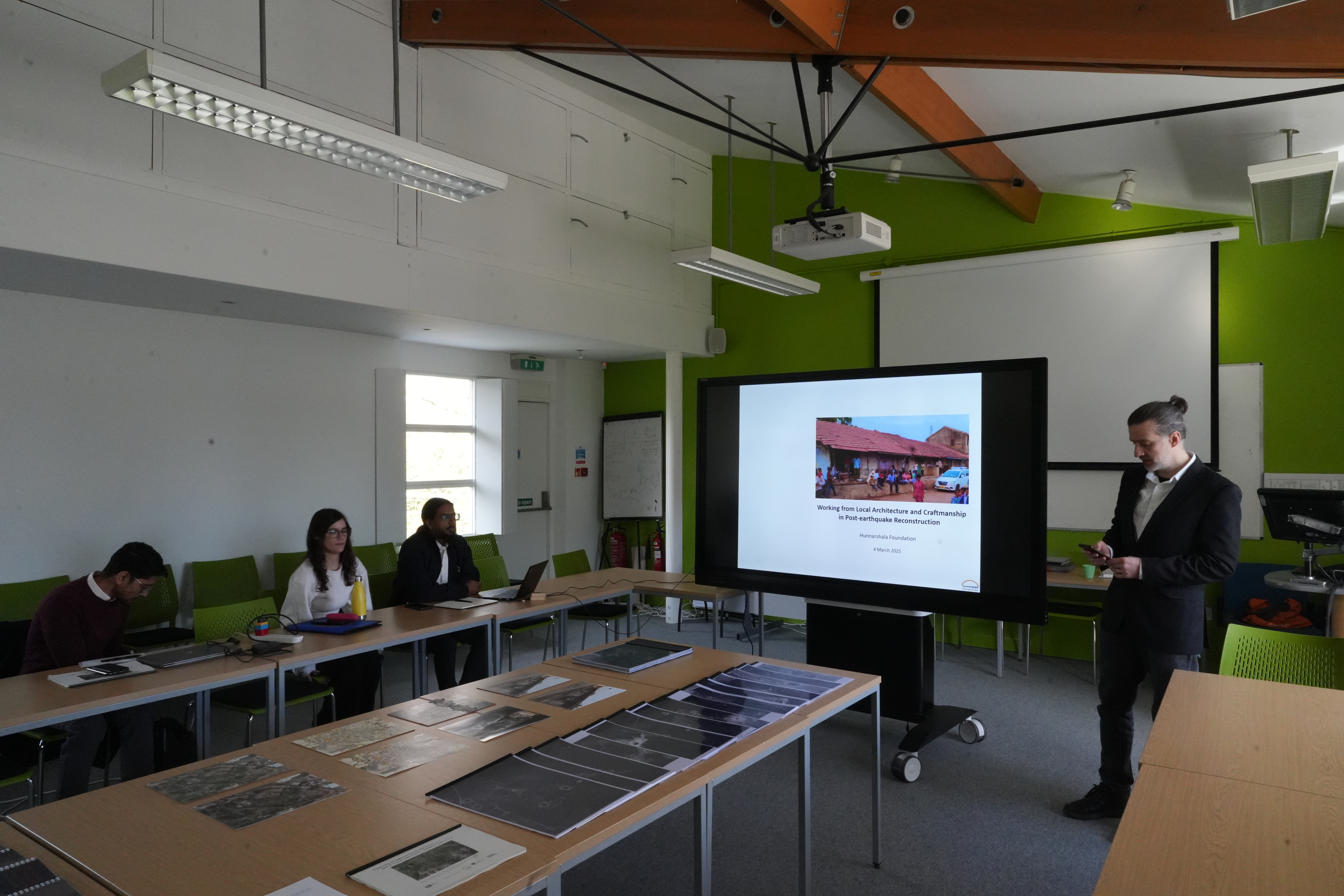
During the lunchtime seminar, Bernadette Devilat gave a short introductory presentation, followed by the presentation of Aditya Singh, from the Hunnarshala Foundation, an Indian NGO involved in several post-earthquake reconstruction processes in the area.
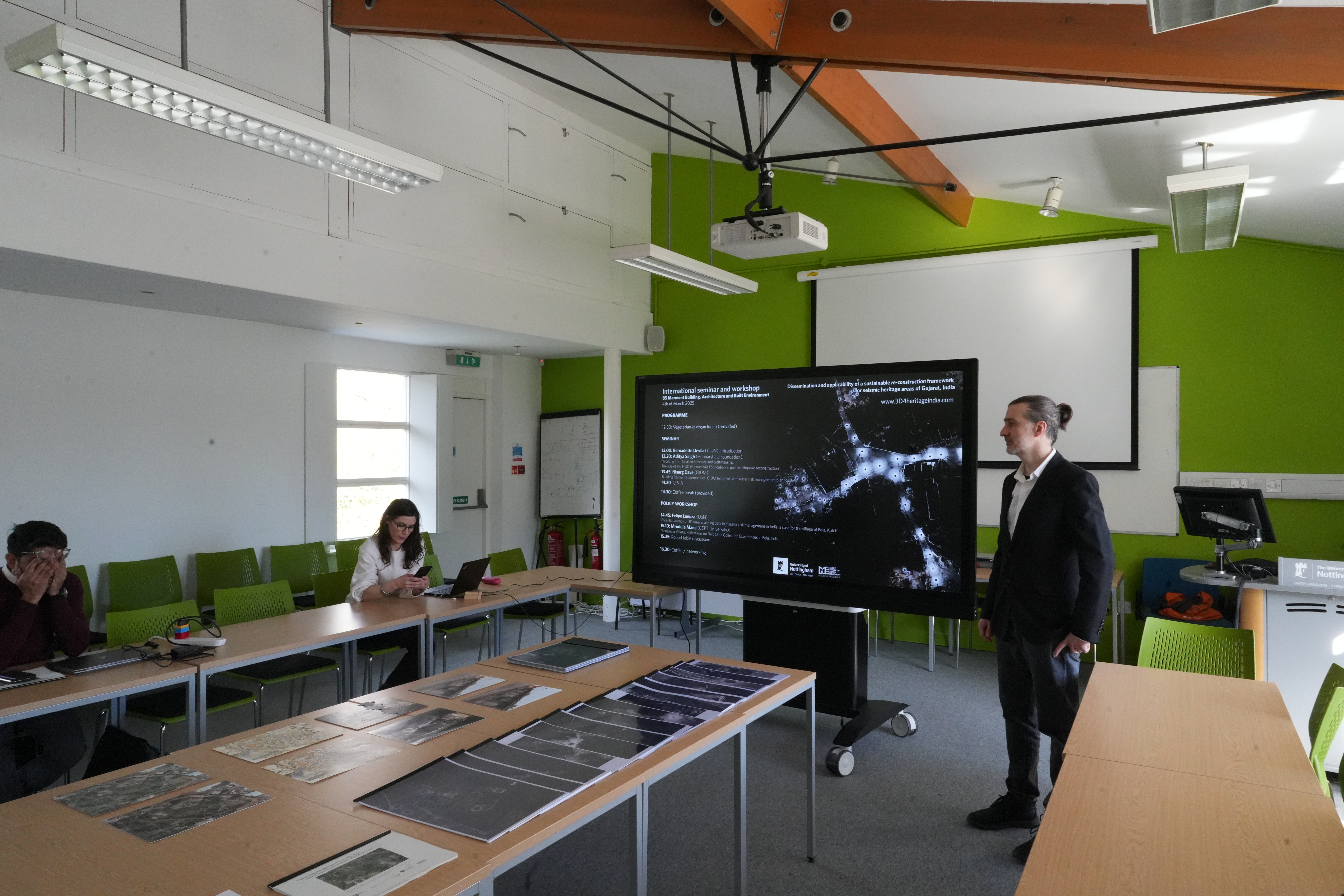


Nisarg Dave continued presenting the work of GIDM, our project partner in the current phase 4 of this research project. He presented how GIDM, as a governmental institution, is working to develop preparedness in the face of disasters in Gujarat, their involvement in the context of this research project, and our latest outcome: a Disaster Risk Management Plan for Bela. The session was followed by questions and discussion.


After the coffee break, Dr Felipe Lanuza presented how the 3D-laser-scan data obtained on-site in Bela informed the development of that Disaster Risk Management Plan using two examples, including the Chabutra (birdfeeder). Then, Mrudula Mane from CEPT University presented her observations and the social implications of the on-site data collection at Bela. The seminar finished with a roundtable discussion about possibilities for the further implementation of the framework developed, and the next steps of this research project.


Special thanks to all attendees for such a rich discussion and to Hanyu Zheng for recording the presentations and taking pictures.
This activity was funded by a grant from the International Research Collaboration Fund, University of Nottingham.
દ્વારા અનુવાદિત: સંજયભાઈ દવે, ડેવલપમેન્ટ જર્નલિસ્ટ, ચરખા નેટવર્ક, અમદાબાદ
 3D for Heritage India